

Blog
.png?width=1280&height=720&name=January%202026%20Header%20(2).png)

Whole-person care unites behavioral, physical and social health into one coordinated model. This blog post outlines how integration drives value and outcomes for health plans, especially when designed to support prevention, early identification and long-term wellbeing. The evidence is clear: mental and physical health are inseparable. Individuals with behavioral health conditions are twice as likely to have chronic diseases like diabetes or heart disease, yet most care models treat these needs in isolation. And the factors that influence behavioral health are often upstream: stress, sleep disruption, loneliness, caregiver burden, financial strain and other social determinants can increase risk long before members enter the clinical system.
As health plans enter a new year focused on prevention and value-based outcomes, whole-person behavioral health offers a clear path forward: identify risk earlier, engage members with the right level of support and reduce avoidable escalation into high-cost events.
Whole-person behavioral health connects mind and body through integrated care teams, shared data and coordinated treatment plans. Health plans adopting this approach see reductions in total health care costs, improvements in quality-of-life metrics and stronger member engagement -particularly for members navigating chronic conditions, comorbid behavioral health needs and complex social barriers.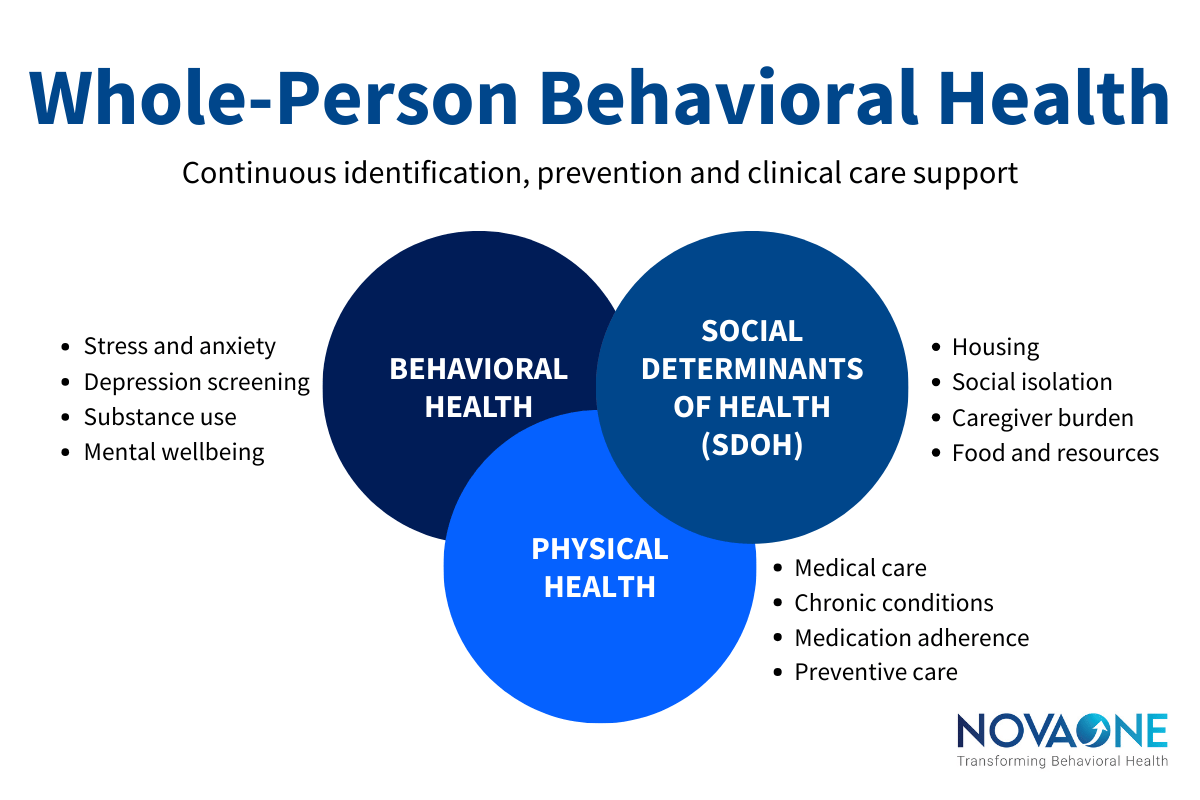 NovaOne’s platform unites behavioral health with physical and social determinants of health, creating a seamless member experience across the full continuum of need. Members can access everything from preventive digital self-guided tools (stress, sleep, resilience and coping skills) to coaching and care navigation, to evidence-based clinical treatment when needed - all within one data-informed ecosystem. This integrated approach helps plans move beyond reactive care toward proactive prevention and whole-person wellbeing.
Whole-person care is not just a trend; it’s a strategic necessity for payers navigating value-based care - and for large, self-insured employers with out-of-control healthcare costs. Integration fosters accountability, efficiency, early diagnosis and treatment and measurable impact across populations. Just as important, it supports improved quality of life helping members sustain progress over time and reducing risk through ongoing check-ins and continuous support.
Discover how NovaOne supports whole-person care and helps health plans achieve integrated outcomes for members.